Infrastructure Deficit
My first local government related job was a research project with the Government Financial Officers Association of BC back in 2010ish where we did some research looking at the then new concept of the “infrastructure deficit” of municipalities across Canada and to look specifically at their reporting of Tangible Capital Assets as required by new Public Sector Accounting Board standards. The Federation of Canadian Municipalities participated in a 2019 report assessing the municipal infrastructure deficit and sounded the alarm bells. However, since then, I don’t believe municipalities have done much, mostly because they are too busy looking after the various other things that happen in communities.
If we apply the Tangible Capital Asset framework directly to the Municipality of North Cowichan, we find this reporting in their Annual Reports.
Looking specifically to page 95 of the 2024 Annual Report, we find the following graph specific to the Joint Utility Board:
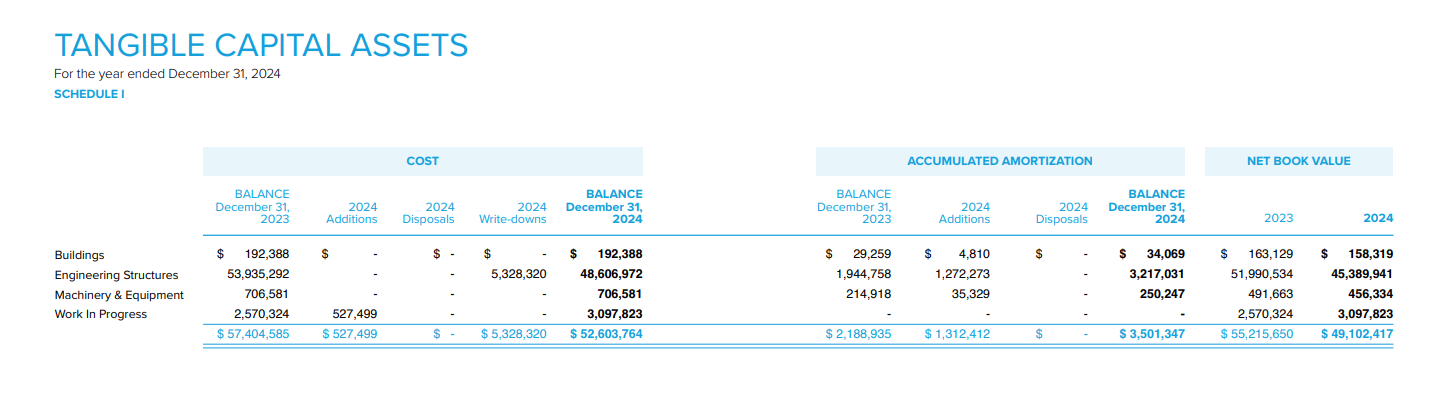
North Cowichan 2024 summary of Tangible Capital Assets in their annual report
Having looked at hundreds of these types of Schedules, I was surprised to see how little information is reported for North Cowichan.
If you want to know what a proper schedule for tangible capital assets for the municipality as a whole should look like, check out the 2024 Annual Report for Duncan (see page 88):
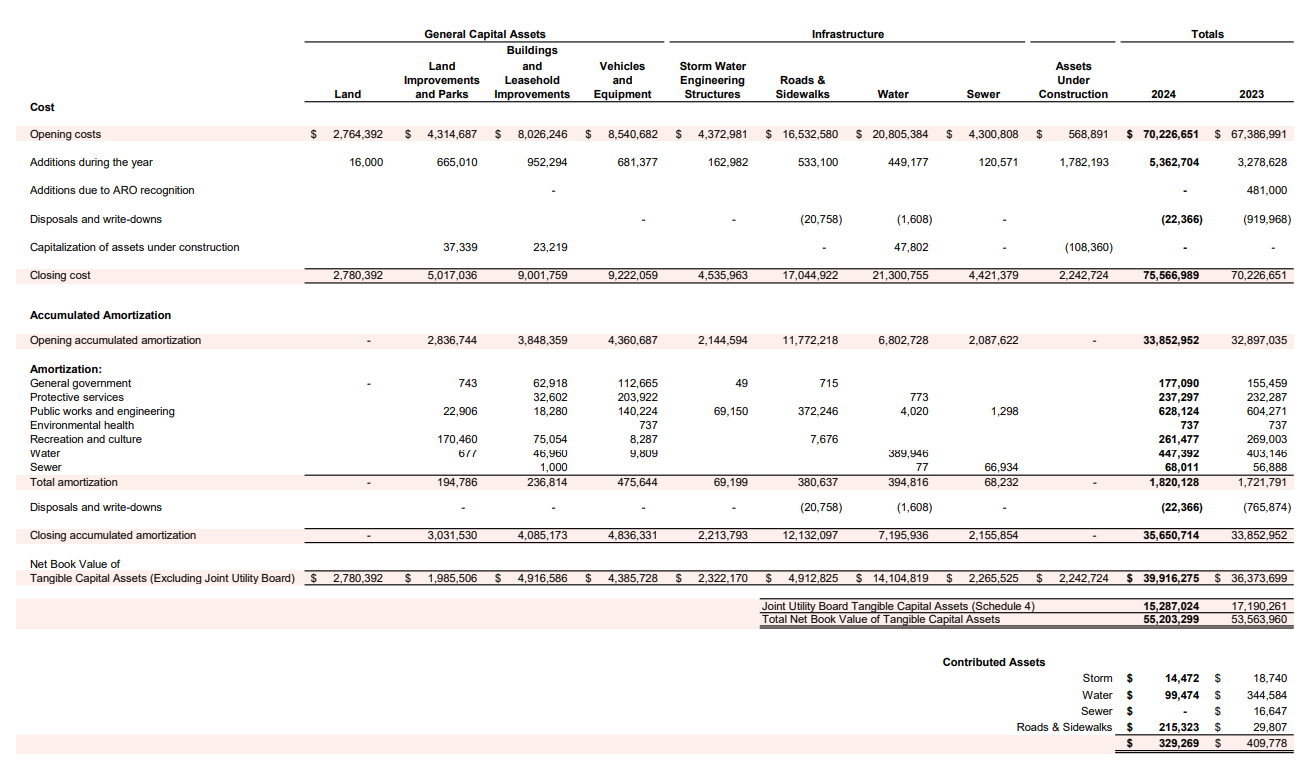
A standard schedule of Tangible Capital Assets as seen from the City of Duncan in 2024
I will now look into the Municipality of Campbell River now because members of Council for North Cowichan have spoken of how Campbell River is a comparable municipality - their schedule of Tangible Capital Assets is available from page 165 of their 2024 Annual Report:
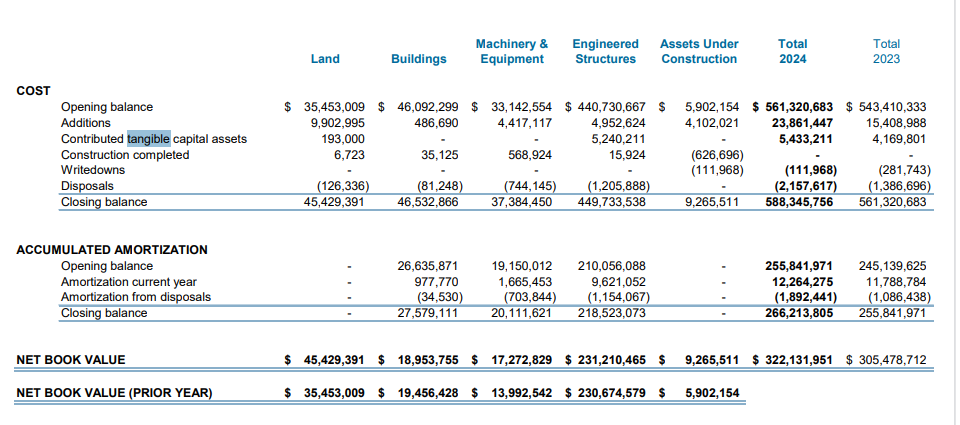
Schedule of Tangible Capital Assets for the Municipality of Campbell River - reporting expected levels of assets
To try and better understand what is going on with the low relative value of declared assets in North Cowichan, I looked at a second table from the 2024 Annual Report found on page 46 called: CONSOLIDATED STATEMENT OF CHANGES IN NET FINANCIAL ASSETS (DEBT)
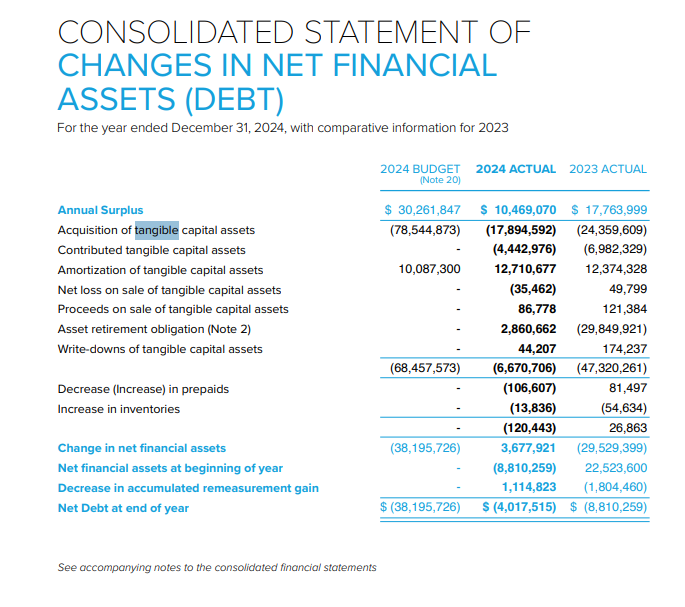
2024 table of changes in net financial assets for the Municipality of North Cowichan
According to this report, the Municipality of North Cowichan budgeted a total of nearly $80 million dollars in contributions to tangible capital assets, however, only 1/4 of this budget was spent in 2024. I note that this trend in partial capital spending is also obvious from the 2025 budget dashboard for the municipality where you can see that as of total, the municipality has only spent 41% of their capital budget even though the budget year ends in 2 months.
All in all, the point I want to make, is that in our world of ever increasing taxes and asset related catastrophizing, we here in North Cowichan can’t do much to track our progress if we don’t even have a transparent summary of the assets we currently own and maintain. I realize that in the 2026 fiscal year the Municipality has proposed:
Include $100,000 for Asset Management software in the 2026 budget;
Include $51,960 for the Asset Manager position from August to December in the 2026 budget;
There was also an Asset Management Priorities Staff report put to Council in November 2025 which seems to have served to justify the new budget line items for 2026. I see that the Municipality also has a 2021 Asset Management Policy document but I am not sure it is used much. The other piece I will mention, which I know I have mentioned before, is the current state of Municipal Reserve Funds to assess what monies have been put aside for purchase of particular items, including some of which appear to have been saved for infrastructure reasons but really not much:
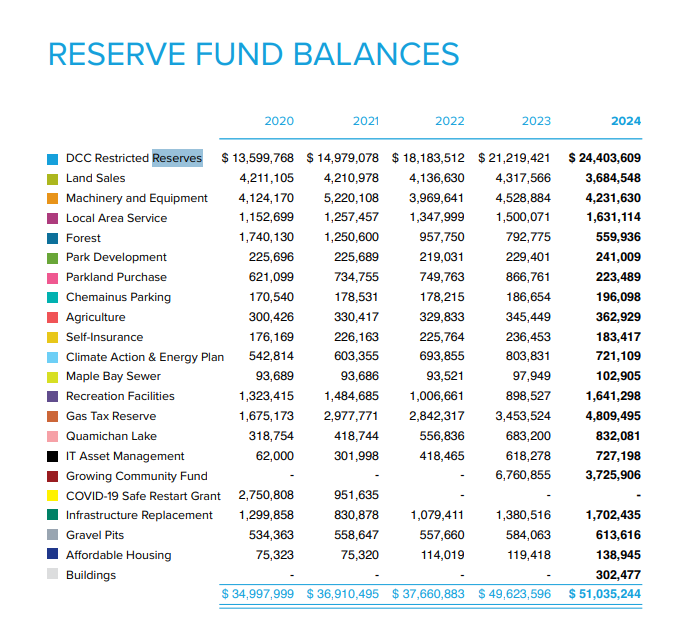
Value of Municipal Reserves (savings) at end of 2024
All and all, I fully believe this is something we should be talking more about, especially in the realm of catastrophic water main brakes in Calgary and our evolving climate which means that 1 in 100 year events are now happening regularly.
Update; This question of Tangible Capital Assets kept rolling around in my head so I started looking at other financial statements produced by the municipality of North Cowichan and I found what I was looking for. Odd that they don’t provide it in their Annual Report, but oh well, I found it in Note 10 of their 2024 Consolidated Financial Statement - see page 20:
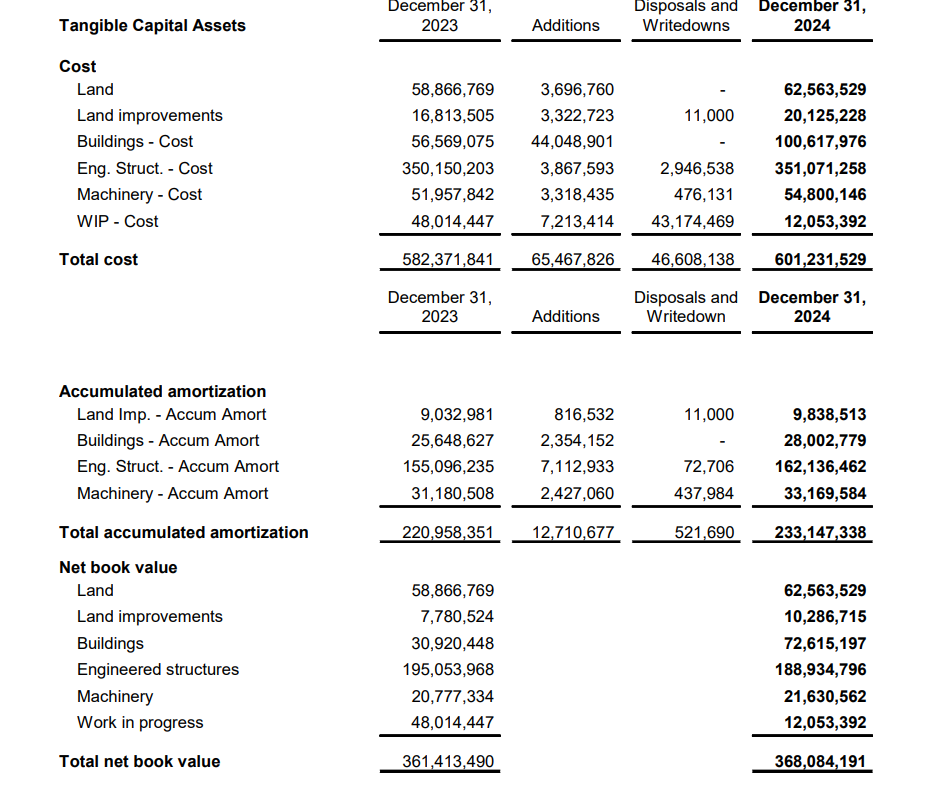
Reported values for tangible capital assets at year end 2024 for North Cowichan
What questions do you have looking at this table? I would like to see the level of detail that the city of Duncan provides regarding the breakdown of engineered structures. For instance, what is the values of our road network? What is the value of our water distribution network or our sewer distribution network?